Clean Lines, Calm Spaces, and Timeless Outdoor Design That Elevates Any Home
In a world where busyness often spills into every corner of life, minimalist landscaping offers something rare and refreshing: calm. It is not about emptiness or lack of creativity, but about intention. Every plant, pathway, and material is chosen with purpose, creating outdoor spaces that feel open, balanced, and effortlessly beautiful. Minimalist landscaping has become increasingly popular among homeowners who want a yard that is both visually striking and easy to maintain. Instead of overwhelming the senses with dense plantings and decorative clutter, minimalist design focuses on simplicity, clean lines, and a thoughtful use of space. The result is an outdoor environment that feels peaceful, modern, and timeless. Whether you have a small urban backyard or a larger suburban property, minimalist landscaping can transform your outdoor space into a place that invites relaxation and quiet enjoyment.
A: Not necessarily; it usually means using plants more selectively and repeating them with intention.
A: It can be simple or high-end, depending on the materials, hardscaping, lighting, and scale of the project.
A: Ornamental grasses, evergreen shrubs, sculptural trees, and clean-form plants are all popular choices.
A: Often yes, especially when they reduce lawn size and rely on fewer plant varieties.
A: Yes, minimalist design often works beautifully in smaller spaces because it keeps them open and uncluttered.
A: Gravel, concrete, stone, wood, steel edging, and simple planters are all common minimalist choices.
A: Yes, but it is often used sparingly, with texture and form doing more of the visual work.
A: No, many minimalist yards reduce or replace lawn with gravel, pavers, ground cover, or planted zones.
A: Adding too many materials, too many plant types, or too many decorative accents can weaken the clean look.
A: Start with strong structure, choose fewer elements, repeat them thoughtfully, and let open space be part of the design.
What Defines Minimalist Landscaping
Minimalist landscaping is guided by a few key principles: simplicity, structure, repetition, and intentional contrast. These principles work together to create harmony without excess.
- Simplicity means reducing visual noise. Instead of dozens of plant varieties, minimalist landscapes often rely on a limited palette.
- Repetition creates rhythm, using the same plants, materials, or shapes throughout the space to establish cohesion.
- Structure plays a central role. Clean lines, geometric shapes, and well-defined boundaries help organize the landscape.
- Contrast adds interest, often through the interplay of textures, colors, and materials.
This approach does not eliminate creativity. Instead, it refines it, allowing each element to stand out.
Start With a Clear Layout
A minimalist landscape begins with a strong layout. Before choosing plants or materials, it is important to define how the space will be used and how it will flow.
Straight pathways, rectangular patios, and clearly defined zones create a sense of order. Even in more organic designs, the layout should feel intentional rather than random.
Negative space is just as important as the elements themselves. Leaving areas open allows the eye to rest and enhances the impact of the features that are present.
Planning your layout carefully ensures that every part of the landscape contributes to the overall design.
Choose a Limited Plant Palette
One of the most recognizable features of minimalist landscaping is the use of a restrained plant selection. Instead of filling a garden with many different species, minimalist designs often focus on a few carefully chosen plants.
Grasses, evergreens, and sculptural plants are particularly popular. Their clean shapes and consistent appearance align well with minimalist principles.
Repeating the same plants throughout the landscape creates unity and reduces visual clutter. It also simplifies maintenance, as fewer plant types mean more predictable care requirements. A limited palette does not mean boring. When used thoughtfully, it creates a sophisticated and cohesive look.
Embrace Texture Over Color
In minimalist landscaping, texture often takes precedence over bold color. Subtle variations in foliage, stone, wood, and gravel create visual interest without overwhelming the design.
Soft ornamental grasses contrast beautifully with smooth concrete or stone surfaces. Rough bark or weathered wood adds depth to otherwise simple compositions.
Neutral color schemes, such as greens, grays, and earth tones, contribute to a calming atmosphere. Occasional accents, such as a single flowering plant or a carefully placed feature, can add just enough contrast to draw attention.
By focusing on texture, the landscape feels layered and engaging while remaining understated.
Use Hardscaping to Define Space
Hardscaping elements play a major role in minimalist design. Materials such as concrete, stone, wood, and gravel provide structure and anchor the landscape.
Simple patios, clean-lined walkways, and geometric retaining walls help define different areas within the yard. These elements create a framework that supports the softer aspects of the landscape.
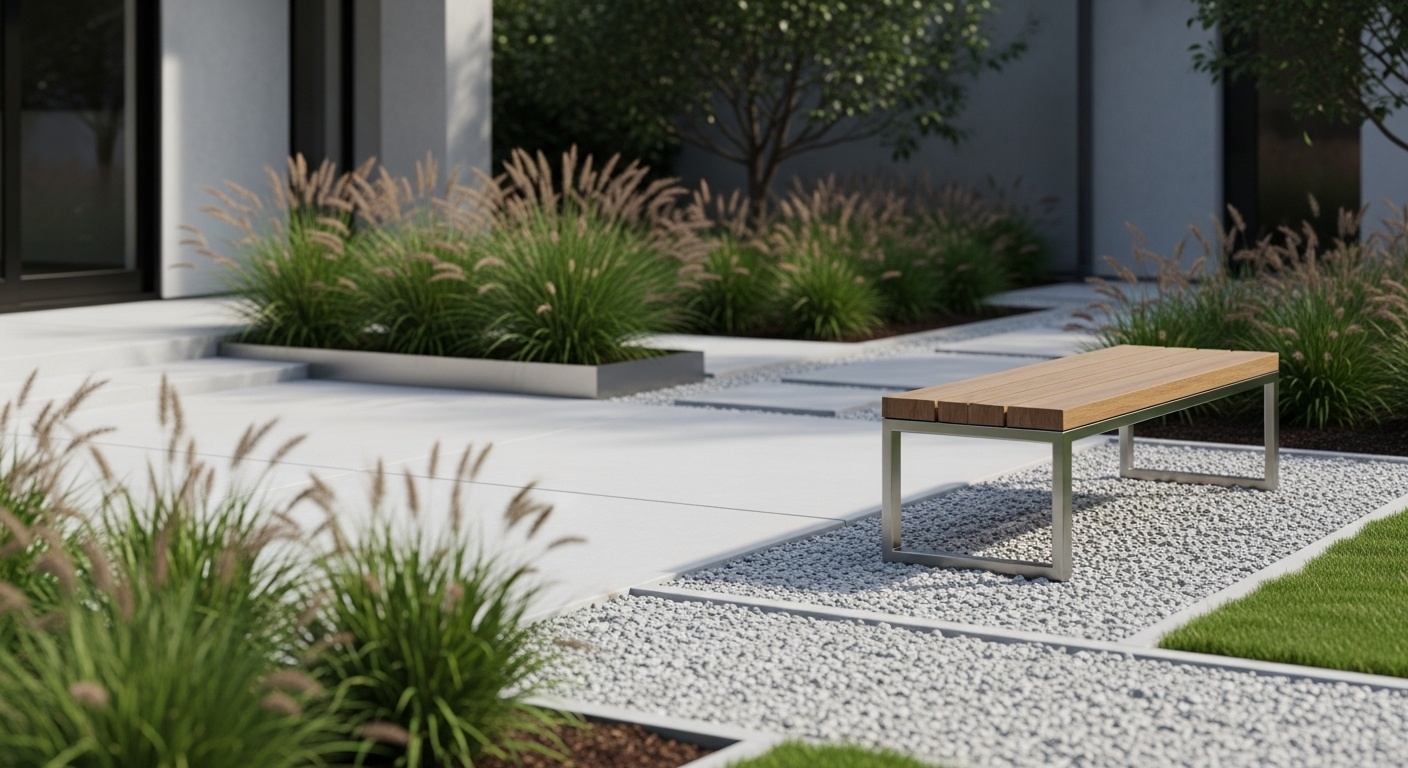
Gravel gardens are a popular minimalist feature. They require less maintenance than traditional lawns and provide a clean, modern appearance.
Water features, such as reflecting pools or simple fountains, can also enhance the sense of tranquility without adding visual clutter.
Focus on Functional Beauty
Minimalist landscaping is not just about appearance; it is also about function. Every element should serve a purpose, whether it is providing seating, guiding movement, or enhancing comfort.
Outdoor furniture should be simple and well-proportioned. Clean lines and neutral tones help maintain the overall aesthetic.
Lighting is another important consideration. Subtle, well-placed lighting can highlight key features and extend the usability of the space into the evening. By prioritizing functionality, minimalist landscapes become spaces that are both beautiful and practical.
Reduce Lawn Areas
Traditional lawns can require significant maintenance, including mowing, watering, and fertilizing. Minimalist landscaping often reduces or eliminates large lawn areas in favor of more sustainable alternatives.
Ground covers, gravel, and hardscaping can replace grass while maintaining an open and clean appearance. These options often require less water and upkeep, making them more environmentally friendly. When lawns are included, they are typically smaller and more intentional, serving as a simple green contrast within the design.
Incorporate Natural Elements
Minimalist landscapes often draw inspiration from nature. Stones, wood, and water are used in ways that feel organic and grounded. Large stones can act as focal points, while wooden elements add warmth to the design. Water features introduce movement and sound, enhancing the sense of calm. The goal is not to replicate nature exactly, but to capture its essence in a refined and controlled way.
Simple Recipe for Success: A Minimalist Garden Layout Idea
Imagine a backyard transformed into a serene retreat.
- A rectangular concrete patio anchors the space, bordered by a narrow strip of ornamental grasses that sway gently in the breeze.
- A gravel pathway leads to a small seating area with a wooden bench. Along one edge, a row of evenly spaced shrubs creates a clean, structured backdrop.
- A single tree stands as a focal point, its shape highlighted by soft lighting in the evening. The rest of the space remains open, allowing the design to breathe.
This type of layout demonstrates how simplicity, repetition, and thoughtful placement can create a powerful visual impact.
Lighting: Subtle Yet Transformative
Lighting plays a crucial role in minimalist landscaping, especially after sunset. The goal is to enhance the design without overpowering it. Low-profile fixtures can illuminate pathways, while soft uplighting highlights plants and architectural features. Warm light tones contribute to a welcoming atmosphere. By keeping lighting subtle and intentional, the landscape maintains its calm and cohesive feel even at night.
Maintenance Made Simple
One of the greatest advantages of minimalist landscaping is its ease of maintenance. Fewer plant varieties and reduced lawn areas mean less time spent on upkeep.
Regular care focuses on maintaining clean lines, trimming plants, and keeping surfaces tidy. Because the design is simple, small details become more noticeable, making consistency important.
This streamlined approach allows homeowners to enjoy their outdoor space without constant work.
Adapting Minimalism to Different Spaces
Minimalist landscaping is highly adaptable. In small urban spaces, it can create the illusion of openness and maximize functionality.
In larger yards, it can bring order and clarity, transforming expansive areas into cohesive environments.
Climate and regional conditions should also be considered. Choosing plants and materials suited to your environment ensures long-term success and sustainability.
By tailoring minimalist principles to your specific space, you can achieve a design that feels both personal and practical.
Final Thoughts: Designing With Intention
Minimalist landscaping is more than a design trend; it is a philosophy. It encourages thoughtful choices, intentional design, and a focus on what truly matters. By embracing simplicity, structure, and balance, you can create an outdoor space that feels calm, modern, and timeless. In a world filled with constant stimulation, a minimalist landscape offers something different: a place to slow down, breathe, and enjoy the beauty of simplicity.