Exploring the Timeless Design, Architectural Heritage, and Modern Renovations of America’s Classic Colonial Homes
Colonial style homes have remained one of the most beloved architectural designs in American housing for centuries. With their symmetrical façades, timeless brick or wood siding, and dignified presence, Colonial houses evoke a sense of tradition, stability, and classic beauty. These homes are not just architectural relics from the past; they continue to shape neighborhoods, inspire modern homebuilders, and influence contemporary residential design. From their origins in early American settlements to their continued popularity in modern suburbs, Colonial homes represent a fascinating blend of history and practicality. Their balanced proportions, efficient layouts, and adaptable style have allowed them to evolve while still preserving their historic charm. Understanding the history, defining features, and modern updates of Colonial style homes reveals why this architectural classic continues to stand the test of time.
A: Symmetry, a centered entry, evenly spaced windows, and a simple rectangular form are key traits.
A: Colonial is historic-era; Colonial Revival is a later reinterpretation with modern construction and amenities.
A: Often yes—separate living zones, clear bedroom layouts upstairs, and practical room shapes work well.
A: Kitchens, bathrooms, energy efficiency, and improved flow—especially when design choices remain timeless.
A: Some may have outdated wiring, insulation gaps, or aging windows—an inspection helps identify priorities.
A: Yes—rear or side additions that respect massing and window rhythm preserve the iconic front façade.
A: Today mostly yes, but properly sized shutters and correct hardware keep the look authentic.
A: Crisp whites, historic blues/greens, warm neutrals, and classic black accents typically look best.
A: Brick can be durable, but mortar joints and moisture control still require periodic upkeep.
A: Preserve trim, proportions, and symmetry while upgrading systems, kitchens, and baths with classic materials.
The Historical Origins of Colonial Architecture
Colonial architecture traces its roots to the early European settlers who arrived in North America during the 1600s and 1700s. As settlers from England, Spain, France, and the Netherlands established colonies along the Atlantic coast, they brought with them building traditions from their homelands.
Early Colonial houses were practical structures designed to withstand harsh climates while providing shelter and durability. Builders relied on locally available materials such as timber, brick, stone, and clay. Because resources were often limited, early homes were modest in size and simple in design.
The most influential Colonial architectural style in the United States came from British settlers. These homes emphasized symmetry, simple geometry, and functional layouts. Over time, this style evolved into what we now recognize as the classic American Colonial home.
By the late 18th century, Colonial houses became more refined as wealth increased in the colonies. Decorative elements such as paneled doors, detailed moldings, and elegant fireplaces began to appear. Despite these additions, the core design principles remained centered on symmetry, practicality, and proportion.
The Rise of the Colonial Revival
While Colonial homes were common during the early years of American settlement, the style experienced a powerful resurgence in the late 19th and early 20th centuries. This movement became known as the Colonial Revival.
Following the American Centennial celebration in 1876, there was renewed interest in the country’s architectural heritage. Builders and architects began recreating Colonial designs, incorporating historic elements into newly constructed homes.
Colonial Revival homes preserved the traditional symmetry and classical proportions of early Colonial houses but often included larger floor plans, improved materials, and modern amenities.
Throughout the early 1900s, Colonial Revival homes became popular across suburban America. They symbolized stability, heritage, and traditional values, which resonated strongly during periods of national change and growth.
Today, many of the Colonial homes seen in neighborhoods across the United States are actually Colonial Revival interpretations rather than original Colonial structures.
Signature Exterior Features of Colonial Homes
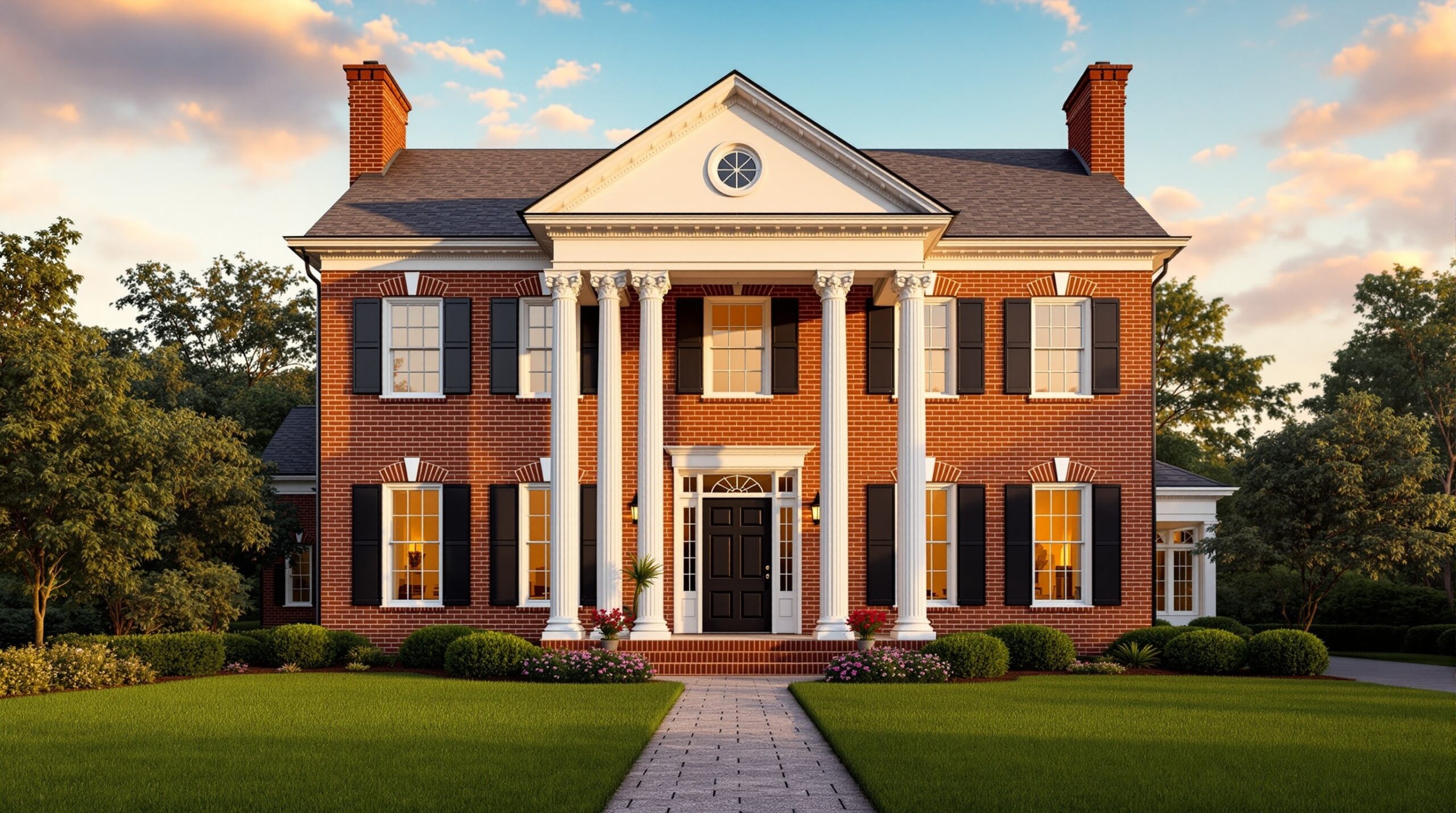
One of the most recognizable aspects of Colonial architecture is its balanced and symmetrical exterior design. Colonial homes are often rectangular or square, with a centered front door and evenly spaced windows on both sides.
The front entrance typically serves as a focal point. Traditional Colonial homes often feature decorative doorways framed by pilasters, pediments, or small porticos. Some variations include columns that support a small entry porch.
Windows are usually double-hung and arranged in a uniform grid pattern. Shutters are commonly included, adding both decorative appeal and historical authenticity.
Rooflines are generally simple and steep, often featuring side-gabled roofs. Chimneys are frequently positioned at the ends of the house, reflecting the importance of fireplaces in early Colonial homes.
Exterior materials vary depending on the region and historical influence. Brick is common in many Colonial homes, especially in the Mid-Atlantic and Southern United States. Wood clapboard siding is also widely used, particularly in New England.
Together, these elements create a façade that feels orderly, refined, and enduring.
The Interior Layout of Colonial Houses
The interior of a Colonial style home typically follows a straightforward and functional layout. Traditional Colonial houses are two stories tall, with living spaces located on the ground floor and bedrooms upstairs.
One hallmark of Colonial interiors is the central hallway. Upon entering the front door, homeowners often step into a central hall that divides the house into balanced rooms on either side. This arrangement reinforces the symmetrical design seen on the exterior.
Living rooms and dining rooms are usually positioned at the front of the house, while kitchens may sit toward the rear. In older Colonial homes, fireplaces were often placed in multiple rooms to provide warmth during cold winters.
Staircases are typically located in the central hallway, leading to the upper level where bedrooms and bathrooms are located.
While early Colonial homes were relatively compact, modern Colonial houses often feature expanded floor plans with larger kitchens, family rooms, and additional living spaces.
Regional Variations of Colonial Style Homes
Colonial architecture evolved differently depending on the cultural influences and climates of various regions. As a result, several distinct Colonial styles developed across North America.
New England Colonial homes are among the earliest forms of the style. These houses often feature steep roofs designed to shed heavy snow and large central chimneys for efficient heating.
Dutch Colonial homes are known for their distinctive gambrel roofs, which provide extra space in the upper level. These homes are commonly found in parts of New York and New Jersey.
Spanish Colonial homes, common in the American Southwest and California, reflect Mediterranean influences. These homes typically feature stucco walls, red clay tile roofs, and arched doorways.
French Colonial homes, often seen in Louisiana and along the Gulf Coast, incorporate raised foundations, wide porches, and elegant ironwork.
Each variation maintains the underlying Colonial emphasis on structure and symmetry while reflecting regional culture and climate.
Why Colonial Homes Remain So Popular
Colonial homes have remained a staple of American housing for several reasons. One of the most important factors is their timeless aesthetic appeal.
The symmetrical design and classical proportions create a sense of balance and order that many homeowners find attractive. Colonial homes also blend well with a wide variety of landscaping styles and neighborhood designs.
Functionality is another reason for their enduring popularity. The straightforward layout makes Colonial homes practical for everyday living, with clearly defined spaces for entertaining, dining, and relaxing.
Colonial homes also tend to maintain strong resale value. Because the style has remained popular for generations, it appeals to a broad range of buyers.
For homeowners seeking a house that feels both traditional and adaptable, the Colonial style offers a perfect balance.
Modern Updates to Colonial Style Homes
While Colonial homes are rooted in historic architecture, modern homeowners often update them to accommodate contemporary lifestyles.
One of the most common updates involves opening up the interior floor plan. Traditional Colonial homes feature separate rooms divided by walls, but many homeowners now prefer open-concept spaces.
By removing certain interior walls, kitchens can connect more naturally to dining areas and living rooms while still maintaining the overall structure of the home.
Modern kitchens are another popular upgrade. Stainless steel appliances, large islands, and updated cabinetry bring modern convenience while preserving traditional architectural details.
Energy efficiency improvements are also common. Many Colonial homes have been upgraded with better insulation, energy-efficient windows, and modern HVAC systems.
Exterior updates may include improved siding materials, refreshed paint colors, and enhanced landscaping that complements the home’s symmetrical design.
These updates allow Colonial homes to maintain their historical charm while meeting modern expectations.
Decorating the Interior of a Colonial Home
Interior design within Colonial homes often emphasizes classic elegance and warm, welcoming spaces.
Traditional Colonial interiors frequently incorporate wood floors, crown molding, and paneled walls. Fireplaces often serve as focal points within living rooms and family spaces.
Furniture choices often reflect traditional craftsmanship, with pieces made from wood, leather, and natural fabrics.
Color palettes commonly include warm neutrals, deep blues, forest greens, and rich earth tones. These colors complement the historic character of Colonial architecture.
Modern homeowners sometimes blend contemporary design elements with traditional Colonial features, creating a transitional aesthetic that feels both classic and current.
Colonial Homes in Today’s Housing Market
Colonial homes continue to play an important role in modern real estate markets. They are commonly found in both historic neighborhoods and newly developed suburban communities.
Builders still construct Colonial-inspired homes today, often blending traditional exterior design with modern interior layouts and technologies.
For buyers seeking a home with strong architectural character, Colonial houses offer a sense of permanence and heritage that many newer styles lack.
Historic Colonial homes can also attract buyers interested in restoration and preservation. These homes often feature original woodwork, fireplaces, and architectural details that showcase craftsmanship from earlier eras.
Whether newly built or centuries old, Colonial homes remain a powerful symbol of American residential architecture.
The Enduring Legacy of Colonial Architecture
Few architectural styles have shaped American housing as profoundly as the Colonial style. From humble beginnings in early settlements to its continued influence on modern home design, Colonial architecture represents a remarkable blend of history, practicality, and elegance.
The enduring popularity of Colonial homes reflects their ability to adapt to changing times while preserving their traditional charm. Their symmetrical façades, balanced layouts, and timeless materials create homes that feel both familiar and refined.
As homeowners continue to update and reinterpret Colonial design, this historic style remains firmly rooted in the architectural landscape of the United States.
For anyone interested in classic American homes, the Colonial style stands as a testament to the enduring beauty of thoughtful design, historical heritage, and architectural tradition.