The Enduring Charm of Ranch Style Homes
Few architectural styles have achieved the lasting popularity of the ranch style home. Known for its long, low profile, open floor plan, and seamless connection to outdoor living, the ranch house remains one of the most recognizable residential designs in the United States. Decades after its rise to prominence in the mid-twentieth century, ranch homes continue to appeal to homeowners, builders, and designers alike. Part of the ranch home’s enduring appeal lies in its simplicity. Unlike more ornate architectural styles, ranch homes focus on practicality, comfort, and livability. They embrace open space, natural light, and a casual lifestyle that resonates strongly with modern homeowners. Today, ranch style homes are not only preserved as architectural classics but also reinvented in contemporary developments. Whether restored to their original charm or redesigned with modern upgrades, ranch homes continue to capture the imagination of buyers who appreciate timeless design.
A: Single-story living, open flow, and easy backyard access make them practical and timeless.
A: Yes—layouts are convenient, and many ranches have yard space for play and gatherings.
A: Not when updated—modern kitchens, baths, lighting, and windows can make ranches feel brand new.
A: Roof condition, insulation, windows, electrical panel, plumbing, and HVAC performance are big ones.
A: Often yes, but you’ll want a pro to confirm which walls are load-bearing and what supports are needed.
A: A ranch is typically one level; a raised ranch has a split entry with living space above and below.
A: Frequently yes—demand for single-story homes can be strong, especially in established neighborhoods.
A: Older ones vary, but insulation, air sealing, windows, and HVAC upgrades can dramatically improve efficiency.
A: Kitchens, bathrooms, flooring continuity, curb appeal, and indoor-outdoor improvements tend to shine.
A: Emphasize clean lines, balanced windows, simple materials, and a low, horizontal landscape design.
The Origins of the Ranch House
The ranch style home traces its roots to early twentieth-century California, where architects began blending Spanish colonial influences with modern American lifestyles. One of the pioneers of this movement was architect Cliff May, who helped popularize the ranch home concept in the 1930s.
May envisioned homes that embraced outdoor living and informal family life. Instead of multi-story houses with rigid room layouts, he designed single-story homes with open living areas, patios, and large windows that connected indoor and outdoor spaces.
The design was heavily inspired by the sprawling ranches of the American West, where buildings were typically low and horizontal to complement the surrounding landscape. These homes emphasized practicality, durability, and comfort rather than elaborate decoration.
Following World War II, the ranch home exploded in popularity across the United States. As suburban neighborhoods expanded rapidly, developers adopted the ranch design because it was affordable to build, easy to scale, and well suited to growing families. By the 1950s and 1960s, ranch homes had become a defining feature of American suburban architecture.
Key Features of Ranch Style Architecture
One of the reasons ranch homes remain popular is their clear, recognizable design language. These homes share several architectural features that distinguish them from other residential styles.
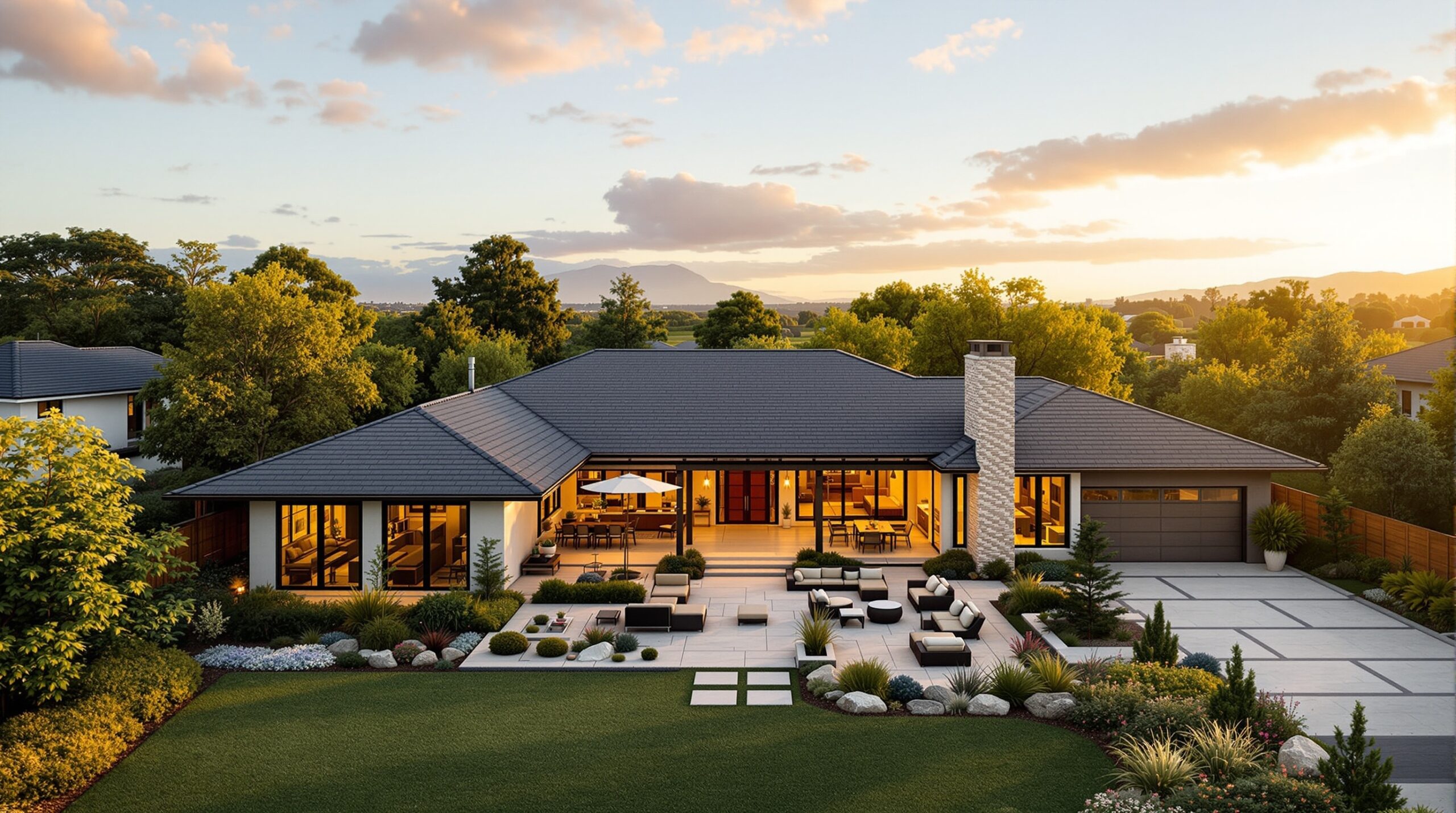
The most obvious characteristic is the single-story layout. Ranch homes are typically built on a single level, creating a wide, horizontal footprint rather than a vertical structure. This design makes them highly accessible and easy to navigate.
Open floor plans are another defining element. Ranch homes often combine living rooms, dining areas, and kitchens into a flowing layout that encourages interaction and flexibility. This concept was ahead of its time when first introduced and aligns perfectly with modern preferences for open living spaces.
Large windows and sliding glass doors are also common features. These elements bring natural light into the home while creating visual connections to outdoor spaces such as patios, gardens, and backyards.
Low-pitched roofs with wide overhangs contribute to the ranch home’s distinctive silhouette. These roofs emphasize the home’s horizontal lines and often extend over porches or walkways.
Finally, ranch homes frequently incorporate attached garages and simple exterior materials such as brick, stucco, wood siding, or stone. These materials create a clean, understated appearance that complements the overall design philosophy.
Why Ranch Homes Became an American Icon
The rise of the ranch home coincided with one of the most transformative periods in American housing history. After World War II, millions of returning soldiers sought affordable homes for their families. Developers responded by building large suburban communities, and ranch homes became the ideal solution.
The design offered several advantages. It was relatively inexpensive to construct, which helped keep housing prices within reach for middle-class families. The single-story layout simplified construction and reduced structural complexity.
Equally important, the ranch home matched the changing lifestyle of postwar America. Families wanted comfortable homes that supported informal living rather than rigid formality. Open floor plans, casual dining spaces, and direct access to the backyard reflected this cultural shift.
Television, popular magazines, and advertising campaigns further cemented the ranch home’s reputation as the symbol of modern American living. By the mid-twentieth century, the ranch house had become synonymous with suburban life.
The Appeal of Single-Story Living
One of the biggest reasons ranch homes remain desirable today is their single-story design. In an era when accessibility and convenience are increasingly valued, the absence of stairs is a major advantage.
Single-level living allows homeowners to move easily throughout the house, making ranch homes especially attractive for families with young children, older adults, or individuals with mobility concerns. This accessibility contributes to the long-term livability of the home.
Maintenance is also simpler. Cleaning windows, maintaining roofs, and performing repairs are generally easier when everything is on one level. Many homeowners appreciate the practicality of a layout that avoids the complexity of multi-story structures.
In addition, ranch homes often feel more connected to the surrounding environment. Because the entire house sits close to the ground, interior spaces naturally open toward gardens, patios, and outdoor living areas.
Ranch Homes and the Indoor-Outdoor Lifestyle
Another defining aspect of ranch style homes is their emphasis on outdoor living. Early ranch architects designed homes that blurred the boundary between interior and exterior spaces.
Large sliding glass doors often lead directly to patios or decks, creating an effortless transition from living room to backyard. This layout encourages outdoor entertaining, family gatherings, and relaxation in natural surroundings.
Many ranch homes also include central courtyards, covered patios, or expansive backyard spaces. These features make the home feel larger and more open while providing functional outdoor areas for dining, recreation, or gardening.
This connection to nature aligns perfectly with contemporary design trends that prioritize natural light, fresh air, and outdoor experiences.
Modern Renovations and Ranch Home Transformations
While classic ranch homes retain their charm, many homeowners choose to modernize them through thoughtful renovations. Because ranch homes typically feature open layouts and simple structures, they are particularly adaptable to remodeling projects.
One popular renovation involves opening up interior walls to create larger living spaces. Although ranch homes were already designed with openness in mind, modern renovations often expand these areas even further.
Updating kitchens and bathrooms is another common improvement. Sleek cabinetry, stone countertops, modern fixtures, and energy-efficient appliances can transform an older ranch home into a contemporary living space.
Exterior renovations are also common. Homeowners frequently update siding materials, add modern windows, or enhance landscaping to give the home a refreshed appearance.
Some homeowners even expand ranch homes vertically by adding partial second stories or loft spaces. While these modifications change the traditional profile slightly, they allow homeowners to increase living space while maintaining the home’s original footprint.
Variations of the Ranch Style
Over time, several variations of the ranch style home emerged, each with its own unique interpretation of the classic design.
The California ranch is often considered the original version. These homes emphasize strong connections to outdoor spaces, often featuring courtyards, patios, and large windows that showcase scenic views.
The suburban ranch became widespread in postwar housing developments. These homes tend to be more compact and standardized, designed for efficient construction and affordability.
Another variation is the raised ranch, also known as a split-entry home. In this design, the main living space sits slightly above ground level, with a lower level partially below grade. A short staircase leads to the main living area.
The split-level ranch introduced multiple levels connected by short staircases, offering greater separation between living spaces while maintaining the horizontal profile of the ranch design.
Each variation reflects evolving architectural trends while preserving the core principles of simplicity, functionality, and comfort.
Ranch Homes in Today’s Real Estate Market
Despite being decades old, ranch homes remain highly desirable in today’s real estate market. In many regions, buyers actively seek ranch homes because of their practicality and adaptability.
One reason for their popularity is the growing demand for accessible housing. As the population ages, many homeowners prefer properties that allow them to live comfortably without navigating stairs.
Ranch homes are also attractive to buyers who want renovation opportunities. Their straightforward layouts make them ideal candidates for remodeling projects, allowing homeowners to personalize the space while maintaining structural simplicity.
Additionally, ranch homes often sit on larger lots compared to newer homes. This extra outdoor space can be appealing for families, gardeners, or anyone seeking a more spacious property.
Because of these factors, well-maintained ranch homes frequently sell quickly in competitive housing markets.
The Design Philosophy Behind Ranch Homes
At its core, the ranch home represents a philosophy of living that values comfort, practicality, and connection to the environment.
Unlike architectural styles that emphasize grandeur or ornamentation, ranch homes focus on how people actually live. Rooms are arranged to encourage interaction, daily routines are simplified through accessible layouts, and outdoor spaces become natural extensions of the home.
This philosophy aligns closely with contemporary design values. Modern homeowners increasingly prioritize open layouts, natural light, flexible spaces, and indoor-outdoor living—all elements that ranch homes pioneered decades ago.
Because of this alignment, ranch homes continue to feel relevant even as architectural trends evolve.
Why Ranch Style Homes Will Never Go Out of Style
Architectural trends come and go, but ranch homes have demonstrated remarkable staying power. Their longevity stems from a combination of practicality, adaptability, and timeless design.
The simplicity of the ranch home allows it to evolve with changing tastes. A ranch house can easily shift from mid-century modern to contemporary minimalism or rustic farmhouse style with thoughtful updates.
At the same time, the underlying structure remains highly functional. Open layouts, single-story living, and strong connections to outdoor spaces are design features that continue to appeal to homeowners across generations.
For these reasons, ranch homes remain one of the most enduring architectural styles in residential history.
Final Thoughts
Ranch style homes are more than just a relic of mid-century suburban expansion. They represent a design philosophy that prioritizes comfort, accessibility, and connection to the surrounding landscape.
Decades after their introduction, ranch homes continue to inspire architects, attract buyers, and shape residential design. Their open layouts, single-story living, and seamless integration with outdoor spaces make them perfectly suited to modern lifestyles.
As housing trends evolve, the ranch home stands as proof that thoughtful, functional design never truly goes out of style. Whether preserved in its original form or reimagined through contemporary renovations, the ranch house remains a timeless icon of American architecture.