A Complete Guide to the Storybook Architecture, Classic Materials, and Timeless Charm of Tudor Homes
Few architectural styles capture a sense of history, charm, and craftsmanship quite like Tudor-style homes. With their steeply pitched roofs, decorative half-timbering, tall chimneys, and storybook character, Tudor homes feel like something pulled from an English countryside village and placed carefully into modern neighborhoods. These homes evoke a romantic vision of medieval England while offering warm, comfortable living spaces filled with texture, detail, and timeless design. Originally inspired by late medieval English architecture during the Tudor period of the 15th and 16th centuries, Tudor-style homes became especially popular in the United States during the early twentieth century. Today they remain beloved for their distinctive exteriors, cozy interiors, and the sense of permanence they bring to residential neighborhoods. Understanding Tudor architecture requires looking beyond its recognizable exterior. The style is deeply connected to craftsmanship, historical influences, and thoughtful interior design choices that emphasize warmth, character, and architectural detail. From the dramatic rooflines to the exposed beams inside, Tudor homes tell a design story that blends European heritage with modern residential living.
The Origins of Tudor Architecture
The Tudor architectural style traces its roots to England during the reign of the Tudor dynasty, which lasted from 1485 to 1603. Homes built during that era were typically constructed with timber framing and filled with materials such as plaster or brick. These homes were designed with steep roofs, narrow windows, and large chimneys to accommodate the heating needs of the time.
Centuries later, architects revived these medieval design elements during the late nineteenth and early twentieth centuries. This movement, often called the Tudor Revival or Mock Tudor style, gained popularity in Europe and the United States as part of a broader interest in historical architecture.
In the United States, Tudor-style homes flourished during the 1920s and 1930s, particularly in suburban developments where architects wanted to create neighborhoods with unique visual character. These homes were often built with modern construction methods but designed to resemble the romantic, handcrafted appearance of old English cottages and manor houses.
Today, Tudor-style homes continue to attract homeowners who appreciate architectural heritage, dramatic visual appeal, and a sense of timeless elegance.
Recognizing the Distinctive Exterior Features
One of the most recognizable elements of Tudor-style homes is their distinctive exterior appearance. Even from a distance, the design features make them easy to identify.
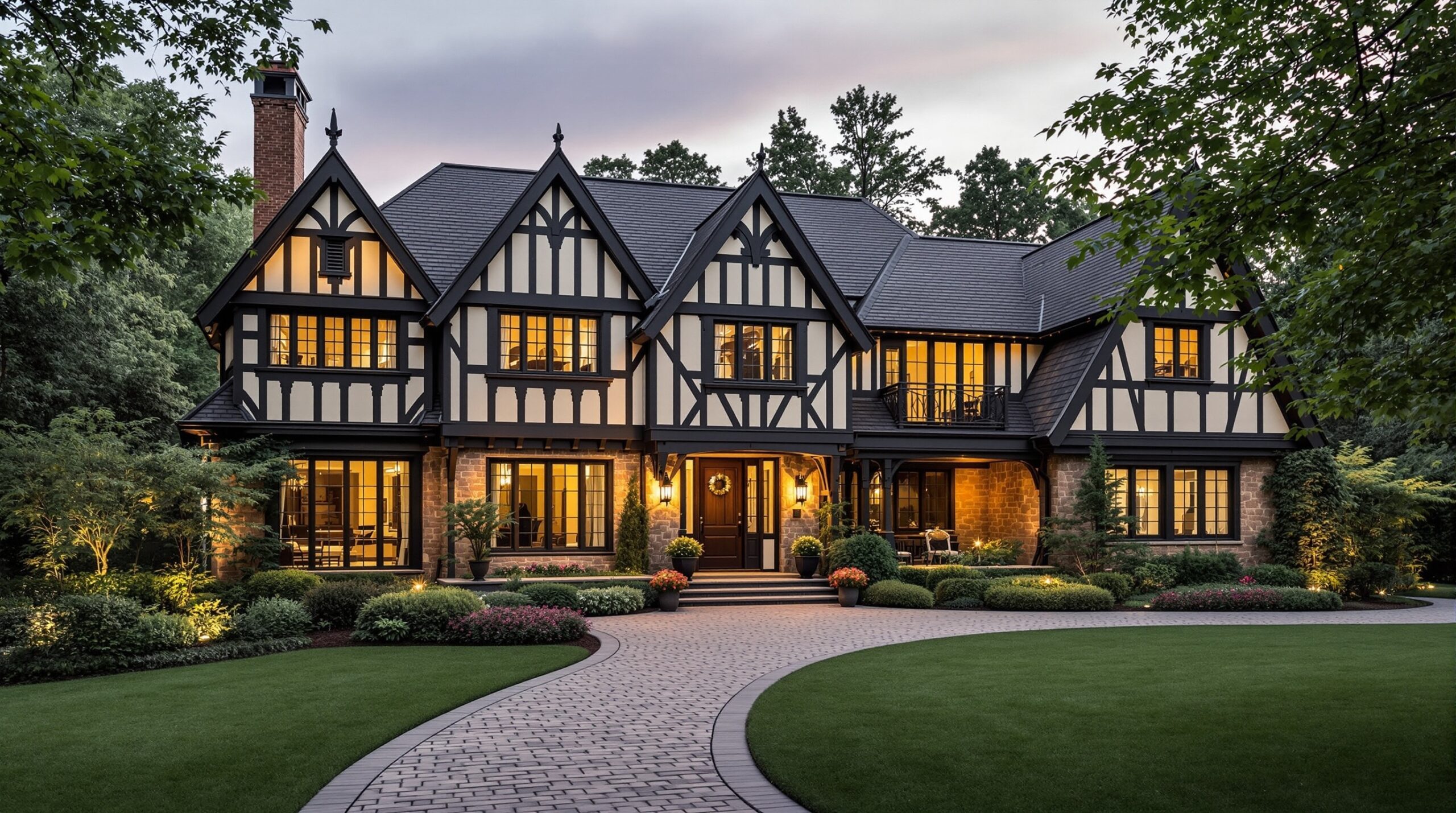
The most iconic element is decorative half-timbering. This design technique exposes dark wooden beams on the exterior of the home, with light-colored stucco or plaster filling the spaces between them. While early Tudor homes used timber framing as a structural element, in Tudor Revival homes the half-timbering is often decorative, designed to replicate historical craftsmanship.
Another defining feature is the steeply pitched roof. Tudor homes often have multiple gables, intersecting rooflines, and dramatic slopes that create a striking silhouette. The steep pitch was historically practical for shedding rain and snow, but it also adds visual drama to the architecture.
Tall, narrow windows are another hallmark of Tudor design. These windows are often arranged in groups and may feature small rectangular panes divided by wood or metal mullions. Leaded glass is common, giving the windows a classic old-world appearance.
Brick and stone are also frequently used in Tudor-style exteriors. Many homes combine materials, such as a brick lower level paired with half-timbered stucco on the upper floors. This mix of textures contributes to the style’s rich, handcrafted feel.
Large chimneys are another defining feature. Historically, these chimneys served fireplaces that heated the home. In Tudor Revival houses, chimneys often become prominent architectural elements, sometimes adorned with decorative chimney pots or intricate brickwork.
Finally, Tudor homes typically feature asymmetrical façades. Instead of perfect symmetry, these homes often include projecting wings, varied roof heights, and uniquely shaped doorways that add character and complexity.
The Iconic Tudor Entrance
The entrance of a Tudor-style home is often one of its most charming elements. Many Tudor homes feature an arched front doorway framed by stone or brick. These doorways often appear slightly recessed, giving the entrance a sheltered and inviting feel.
Heavy wooden doors are common, often accented with wrought iron hardware or decorative hinges. The craftsmanship of the entryway contributes to the overall storybook appearance of the home.
Sometimes the front door is placed within a small tower-like structure or beneath a dramatic gable, further emphasizing the home’s medieval inspiration. These architectural details create a sense of grandeur while maintaining the cozy charm that Tudor homes are known for.
Interior Design: Warmth and Character
Step inside a Tudor-style home and the atmosphere often feels warm, intimate, and richly textured. Interior spaces reflect the craftsmanship and materials seen on the exterior, creating a cohesive architectural experience.
One of the most defining interior features is the use of exposed wood beams. Ceilings in Tudor homes often feature heavy timber beams that add depth and visual interest to living spaces. These beams reinforce the historical inspiration behind the architecture and create a sense of solidity and permanence.
Wood paneling is another classic element. Walls may be lined with rich wood paneling or wainscoting, particularly in dining rooms, libraries, or studies. This design detail contributes to the warm, traditional atmosphere associated with Tudor interiors.
Fireplaces also play a central role in the design of many Tudor homes. Large fireplaces with stone or brick surrounds often serve as the focal point of living rooms or great rooms. In older Tudor homes, multiple fireplaces may appear throughout the house.
The color palette inside Tudor homes typically leans toward warm, earthy tones. Deep browns, muted greens, warm creams, and rich burgundy shades often complement the natural materials used throughout the home.
Layout and Floor Plans
Traditional Tudor homes often feature somewhat compartmentalized floor plans compared to modern open-concept layouts. Historically, homes were designed with separate rooms for specific purposes such as formal dining, entertaining, and quiet study.
Living rooms in Tudor homes are often spacious and anchored by large fireplaces. Dining rooms may be designed with heavy wooden tables, decorative lighting fixtures, and paneled walls that emphasize traditional craftsmanship.
Kitchens in historic Tudor homes were once modest workspaces, but many modern Tudor-style houses feature updated kitchens with contemporary appliances while maintaining traditional design elements such as wood cabinetry and stone countertops.
Upstairs, bedrooms are often tucked beneath the steep rooflines. Sloped ceilings, dormer windows, and cozy alcoves give these rooms a distinctive character that differs from standard rectangular spaces.
Materials That Define Tudor Interiors
The materials used inside Tudor-style homes contribute significantly to the style’s unique atmosphere.
Wood is perhaps the most prominent material. From exposed beams to hardwood floors and carved cabinetry, wood creates a sense of warmth and durability throughout the interior.
Stone is also frequently used in fireplaces, flooring, and accent walls. The rugged texture of stone adds authenticity and reinforces the medieval inspiration behind the design.
Wrought iron is another traditional material often seen in lighting fixtures, stair railings, and decorative hardware. The dark metal contrasts beautifully with warm wood tones and light plaster walls.
These materials combine to create interiors that feel both historic and welcoming.
Decorative Details and Craftsmanship
What truly sets Tudor-style homes apart is the attention to detail and craftsmanship found throughout the design.
Arched doorways are common in Tudor interiors, reflecting the same curved shapes seen on exterior entrances. These arches soften transitions between rooms and reinforce the historical character of the home.
Built-in cabinetry is another classic feature. Bookcases, window seats, and storage benches are often integrated directly into the architecture, providing both functionality and visual charm.
Decorative plaster walls and textured finishes may also appear in Tudor homes, adding subtle visual interest while maintaining a classic appearance.
Lighting fixtures in Tudor interiors often reflect traditional styles, including wrought iron chandeliers, lantern-style pendants, or candle-inspired sconces.
Together, these elements create a rich architectural environment that celebrates craftsmanship and tradition.
Landscaping and Outdoor Design
The exterior charm of Tudor homes often extends into their landscaping and outdoor spaces.
Because Tudor homes evoke the feeling of English countryside cottages, their landscaping often reflects the same aesthetic. Stone pathways, climbing vines, and lush gardens complement the architectural style beautifully.
Many Tudor homes feature mature trees, manicured hedges, and flowering plants that soften the strong lines of the house. Garden walls made from brick or stone can enhance the historic appearance of the property.
Outdoor lighting, wrought iron gates, and rustic garden benches can further enhance the romantic atmosphere associated with Tudor-style homes.
Modern Tudor Homes
While traditional Tudor homes were built nearly a century ago, many modern builders continue to create Tudor-inspired designs today.
Modern Tudor homes often incorporate updated layouts with open living areas while preserving the classic exterior elements such as steep roofs, decorative timbering, and brick or stone façades.
Interior designs may blend traditional materials with modern amenities such as large kitchens, contemporary lighting, and energy-efficient systems.
This balance allows homeowners to enjoy the visual appeal of Tudor architecture while benefiting from modern comfort and functionality.
Why Tudor Homes Remain Popular
Despite the evolution of architectural trends, Tudor-style homes continue to hold strong appeal among homeowners and designers.
Part of their enduring popularity lies in their distinctive visual identity. Unlike more minimalist styles, Tudor homes offer intricate details, rich textures, and a sense of architectural storytelling.
These homes also evoke a romantic sense of history. Their medieval-inspired elements create a timeless charm that feels both nostalgic and elegant.
Additionally, Tudor homes tend to feel cozy and inviting inside. The warm materials, intimate rooms, and fireplaces contribute to a comfortable living environment that many homeowners find appealing.
In neighborhoods filled with modern construction, Tudor homes often stand out as unique architectural landmarks.
Final Thoughts
Tudor-style homes represent a beautiful blend of historical inspiration and enduring design. From their dramatic rooflines and half-timbered exteriors to their warm interiors filled with wood beams and fireplaces, these homes offer a sense of craftsmanship rarely found in contemporary architecture.
Their enduring popularity speaks to the power of timeless design. Tudor homes capture the romance of medieval England while adapting to the needs of modern homeowners.
Whether nestled in quiet suburbs or featured in historic neighborhoods, Tudor-style houses continue to captivate architects, designers, and homeowners alike. Their rich textures, distinctive character, and storybook charm ensure that Tudor architecture will remain a beloved part of the architectural landscape for generations to come.