The Enduring Romance of Sunlit Design, Handcrafted Details, and Timeless Living
There are few architectural styles in the world that instantly evoke warmth, character, and a sense of timeless craftsmanship quite like Spanish Colonial architecture. With its white stucco walls glowing under golden sunlight, terracotta roofs catching the colors of dusk, arched corridors guiding visitors through cool shaded spaces, and hand-painted tiles bringing bursts of artistry to every corner, Spanish Colonial homes possess a magic that feels both historic and deeply livable. More than simply a design style, Spanish Colonial architecture tells a story. It speaks of old-world artisans, sun-soaked courtyards, natural materials shaped by hand, and homes designed not just for shelter, but for gathering, celebrating, and living beautifully. Whether found on the coastal hills of California, in the desert landscapes of the American Southwest, in historic districts of Florida, or throughout Latin America and the Mediterranean, these homes continue to inspire architects, designers, and homeowners who crave authenticity, warmth, and character. In an age where many homes lean toward sleek minimalism or mass-produced uniformity, Spanish Colonial architecture stands apart. It embraces texture instead of perfection, craftsmanship instead of convenience, and atmosphere instead of trend. This enduring style reminds us that homes can feel soulful, welcoming, and connected to both history and place. Let’s step into the world of Spanish Colonial architecture and discover why its warmth, texture, and tile continue to captivate generation after generation.
A: Stucco walls, clay tile roofs, arches, courtyards, wood beams, wrought iron, and decorative tile are key features.
A: Yes. Thick walls, shaded patios, tile floors, and courtyards help make the style naturally climate-conscious.
A: It can be durable, but cracked tiles, flashing, underlayment, and proper installation should be inspected carefully.
A: Yes. Arches, tile, plaster finishes, warm woods, and iron lighting can blend beautifully with modern layouts.
A: Check roof condition, stucco cracks, drainage, foundation issues, electrical updates, plumbing, and preserved original details.
A: Yes, especially for accents, but they should be sealed and cleaned properly depending on their location.
A: Warm whites, creams, sandy neutrals, terracotta, deep wood tones, cobalt blue, olive green, and iron black all fit well.
A: It can, especially when original charm is preserved and updates respect the home’s character.
A: Yes. A tiled patio, fountain, potted plants, arched trellis, and warm lighting can create a courtyard atmosphere.
A: Removing texture, arches, tile, wood, and iron details in favor of flat, generic modern finishes.
The Origins of Spanish Colonial Architecture
Spanish Colonial architecture began centuries ago during Spain’s expansion into the Americas. As explorers, settlers, missionaries, and craftsmen established communities throughout Mexico, the Caribbean, Central and South America, and parts of what would later become the United States, they brought with them building traditions rooted in Spain’s rich architectural heritage. These traditions were influenced by Roman engineering, Mediterranean construction techniques, Gothic forms, and Moorish artistry. As Spanish builders encountered new climates, materials, and cultural influences in the New World, their designs adapted beautifully.
Stone, adobe, clay, timber, lime plaster, and ceramic became essential building materials. Homes needed to remain cool under intense sun, durable through changing weather, and practical for family-centered living. Over time, a distinctive architectural language emerged—one defined by thick walls, shaded courtyards, clay roof tiles, arched openings, wrought iron details, and handcrafted decorative elements. What began as necessity soon evolved into a style celebrated for both beauty and functionality.
Why Spanish Colonial Homes Feel So Inviting
One of the greatest strengths of Spanish Colonial architecture is its emotional impact. These homes rarely feel sterile or overly formal. Instead, they radiate comfort, warmth, and personality. Part of this comes from the materials.
Stucco walls have subtle imperfections that catch sunlight differently throughout the day. Terracotta tiles develop patina over time. Wooden beams reveal grain, texture, and age. Ironwork carries the mark of human hands. These elements create spaces that feel lived in, grounded, and authentic.
Another reason these homes feel so inviting is their relationship with light. Spanish Colonial homes are designed to work with the sun rather than against it. Deep overhangs, covered patios, interior courtyards, and strategically placed windows allow natural light to move gently through the home.
Morning light may spill across tiled floors. Afternoon shadows may stretch under arches. Evening sun may warm stucco walls with golden color. The architecture itself becomes part of the daily rhythm of life.
The Signature Stucco Exterior
When most people imagine Spanish Colonial architecture, the first image that comes to mind is often the iconic stucco exterior.
Stucco is more than just a finish. Historically, it provided durability, insulation, and weather resistance. Made from lime, sand, water, and natural aggregates, traditional stucco created thick protective surfaces that helped regulate indoor temperatures.
Visually, stucco offers something equally important—texture. Unlike perfectly smooth modern finishes, traditional stucco embraces variation. Tiny shadows form across its surface. Light bounces differently throughout the day. Colors shift subtly with the weather.
Most Spanish Colonial homes feature warm neutral tones such as ivory, cream, sand, soft beige, or sun-bleached white. These colors reflect sunlight beautifully while creating a soft, welcoming appearance.
The result is a home that feels both elegant and approachable.
The Magic of Terracotta Roof Tiles
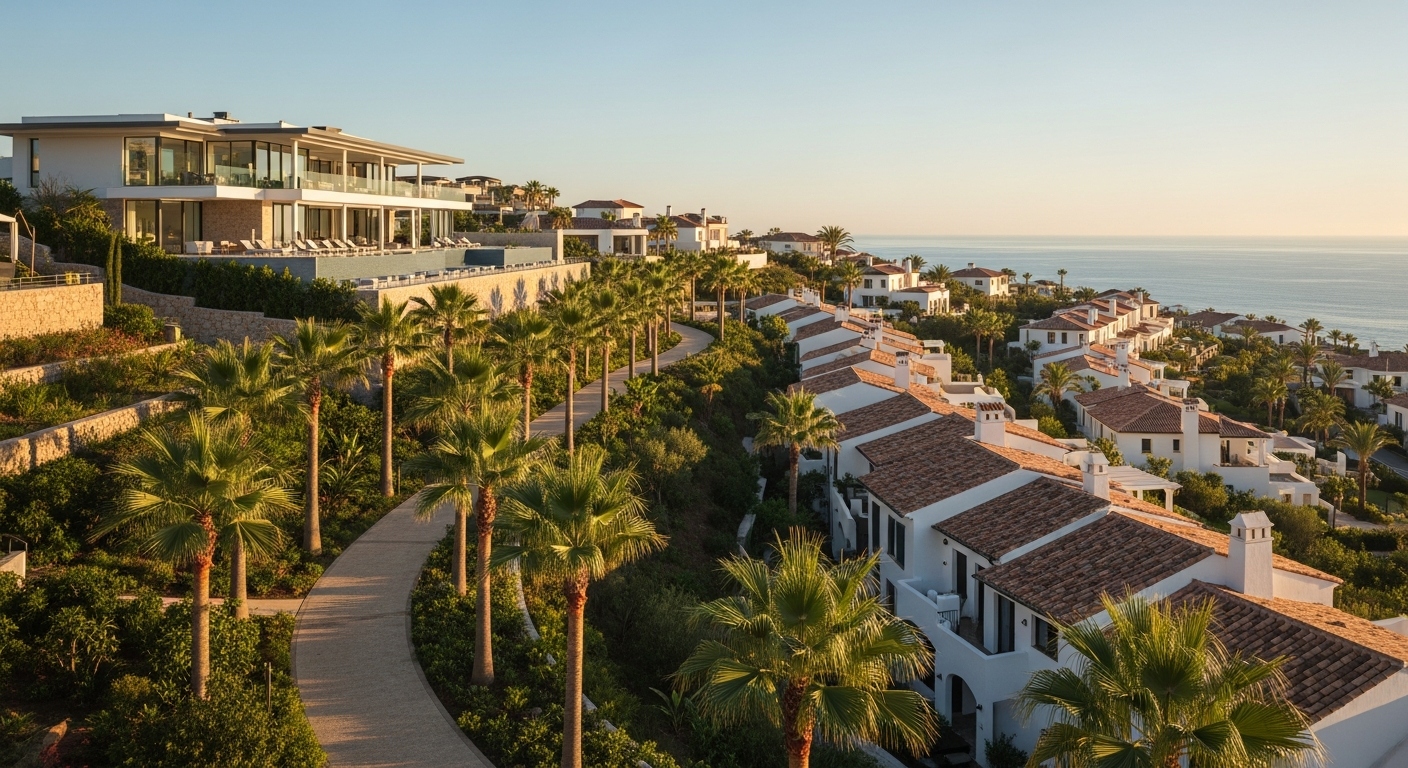
Perhaps no feature is more recognizable than the terracotta roof. These curved clay tiles have been used for centuries throughout Mediterranean and Spanish architecture. Their shape allows rainwater to flow efficiently while creating natural ventilation beneath the roof. But their beauty is just as important as their practicality.
Terracotta tiles range in color from burnt orange and rusty red to soft copper and earthy brown. Over time, exposure to sun and weather creates even richer variations. When paired with white stucco walls and blue skies, the visual effect is unforgettable.
Terracotta roofing also connects the home to the earth. Because clay is a natural material, the roof feels organic rather than industrial. Even from a distance, these roofs communicate warmth, tradition, and permanence.
Arches That Create Flow and Drama
Arches are another defining feature of Spanish Colonial architecture. Rather than sharp rectangular openings, doors, hallways, windows, and outdoor walkways often feature graceful curved forms. These arches create softness and visual rhythm. They also carry deep historical significance, drawing influence from Roman engineering and Moorish design.
- Inside a home, arches help rooms flow naturally into one another. Instead of abrupt transitions, spaces feel connected.
- Outside, arched arcades create shaded walkways that are both beautiful and functional.
Whether framing a courtyard, a fireplace, or an entryway, arches add elegance without feeling overly formal. They create movement, drama, and timeless sophistication.
The Soul of the Home: Courtyards
Few architectural features capture the spirit of Spanish Colonial design better than the courtyard. At the heart of many traditional homes lies an open-air space designed for gathering, relaxation, and connection with nature.
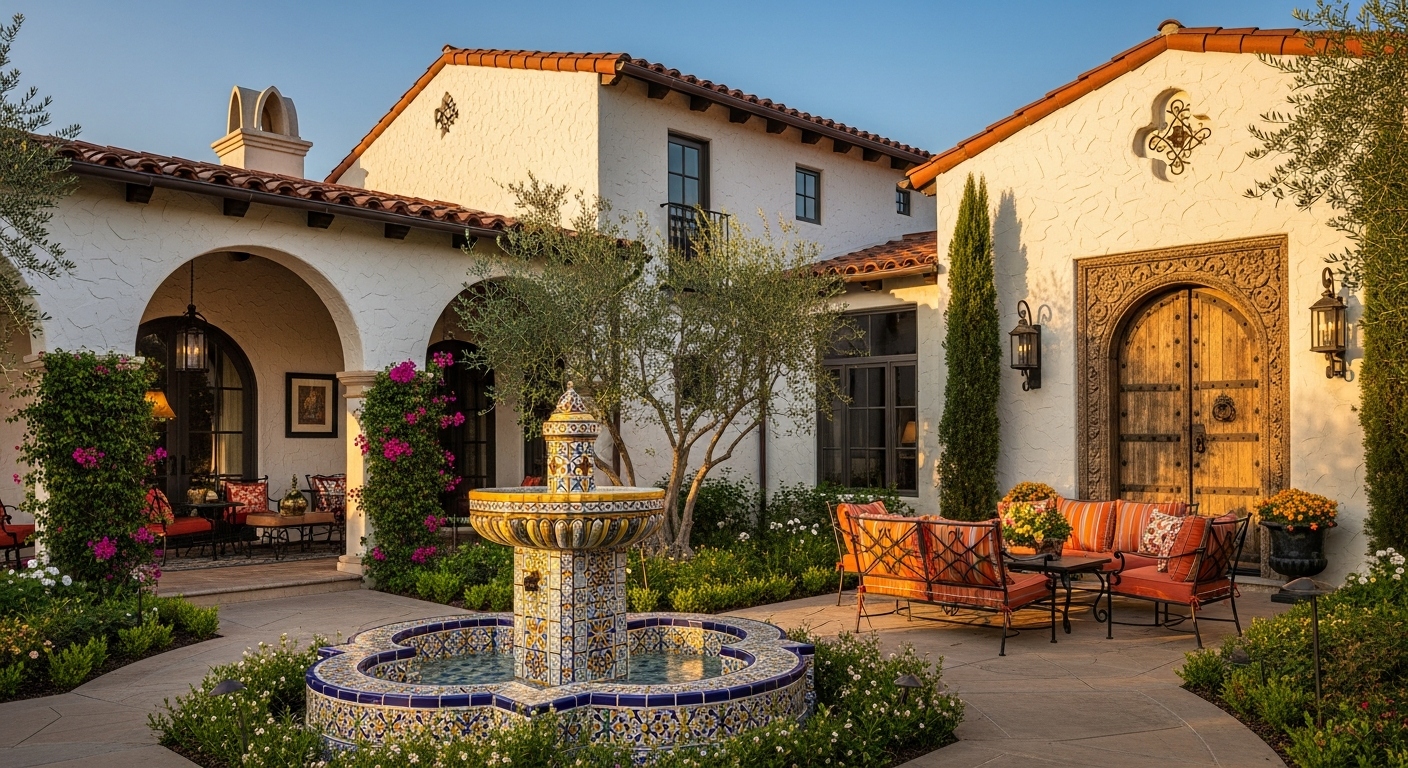
Courtyards often include fountains, potted plants, citrus trees, climbing vines, stone pathways, and decorative tile. These spaces serve practical purposes by improving airflow, bringing natural light into surrounding rooms, and creating cool shaded environments. But emotionally, they do much more.
A courtyard transforms a house into an experience. Morning coffee becomes a ritual under filtered sunlight. Family dinners become celebrations under string lights and stars. Quiet afternoons become moments of reflection beside trickling water.
In Spanish Colonial design, the outdoors is never separate from the home. It is part of the home.
Handcrafted Tile: The Artistic Heartbeat
Tile is perhaps the most beloved detail in Spanish Colonial architecture. From stair risers and kitchen backsplashes to fountains, fireplaces, patios, and staircases, ceramic tile adds color, pattern, and personality. Traditional Spanish and Mexican tile often features intricate geometric patterns, floral motifs, cobalt blues, earthy reds, golden yellows, and rich greens. Every tile feels like a piece of art.
Even small accents can completely transform a space. A simple staircase becomes a statement. A kitchen becomes vibrant. A courtyard fountain becomes unforgettable. Because these tiles are often handcrafted, no two pieces are exactly alike. That slight variation is part of their charm. They celebrate human craftsmanship in a world increasingly dominated by machine perfection.
Exposed Wood and Rustic Character
Wood plays an essential role in Spanish Colonial interiors. Ceiling beams, carved doors, window shutters, cabinetry, and furniture all contribute to the home’s warmth and character.
Exposed beams are especially iconic. Often made from heavy timber with visible grain and natural imperfections, these beams create visual weight and architectural authenticity. Dark wood contrasts beautifully with light plaster walls, creating depth and balance.
Hand-carved doors, sometimes featuring iron studs or decorative hardware, become works of art in their own right.
These elements remind us that architecture is not just about walls and roofs. It is about materials with history.
Wrought Iron Details That Add Elegance
Wrought iron introduces strength, contrast, and artistry. In Spanish Colonial homes, iron appears in railings, staircases, gates, lanterns, chandeliers, balconies, and decorative grilles. These pieces are often handcrafted, featuring scrolls, curves, and intricate detailing.
Against stucco or wood, black iron creates dramatic visual contrast. But iron is not merely decorative. It reinforces the architectural identity of the home, connecting beauty with durability. Even a simple lantern can transform an entryway into something cinematic.
Indoor-Outdoor Living Before It Was a Trend
Long before modern designers embraced indoor-outdoor living, Spanish Colonial homes mastered it.
- Covered verandas, open courtyards, garden terraces, and arched patios create seamless transitions between interior and exterior spaces.
- Large wooden doors open directly into gardens.
- French doors connect dining rooms to patios.
- Outdoor fireplaces extend the living experience beyond the walls.
This approach feels especially relevant today. Homeowners increasingly want spaces that encourage relaxation, entertaining, and connection with nature. Spanish Colonial architecture has been delivering exactly that for centuries.
Why This Style Works So Well in Warm Climates
Spanish Colonial homes are remarkably climate-responsive.
- Their thick walls absorb heat slowly, keeping interiors cool during the day.
- Small strategically placed windows reduce solar gain.
- Courtyards promote airflow.
- Clay roofs provide insulation.
- Covered arcades create shade.
These design choices were developed through generations of practical experience. What many consider beautiful today was originally brilliant environmental design. That combination of beauty and performance is part of why the style remains so relevant.
Bringing Spanish Colonial Style Into Modern Homes
Not every homeowner lives in a historic Spanish Colonial house, but many incorporate its elements into modern builds and renovations.
- A stucco exterior can instantly add warmth.
- Terracotta flooring introduces organic texture.
- Arched doorways soften contemporary layouts.
- Hand-painted tile adds color and artistry.
- Wood beams bring depth to flat ceilings.
- Wrought iron lighting adds drama.
- Even a small courtyard or tiled fountain can evoke the spirit of the style.
The beauty of Spanish Colonial design is that it scales gracefully. Whether used in an estate, suburban home, or urban renovation, its principles remain powerful.
Why Buyers Continue to Love Spanish Colonial Architecture
Real estate trends come and go, but Spanish Colonial homes consistently attract attention. Buyers are drawn to their curb appeal, craftsmanship, and emotional warmth.
These homes photograph beautifully, age gracefully, and offer architectural distinction that many modern properties lack.
- They feel unique.
- They feel rooted.
- They feel like places where stories are made.
In competitive housing markets, homes with authentic architectural identity often stand apart. Spanish Colonial architecture delivers that identity in abundance.
The Timeless Future of Warm Design
As architecture continues to evolve, one thing remains clear: people crave homes that feel human.
- They want texture over sterility.
- Craftsmanship over uniformity.
- Character over convenience.
Spanish Colonial architecture offers all of that and more.
Its stucco walls, terracotta roofs, arched corridors, handcrafted tile, and sunlit courtyards remind us that beautiful homes do more than shelter us. They shape how we live. They influence how we gather. They become part of who we are. And in that sense, Spanish Colonial architecture is not merely a style from the past. It is a timeless vision for the future.