A Home Style That Never Stops Inspiring
Some architectural styles rise in popularity for a season, dominate neighborhoods for a decade, and then slowly fade into history. Others seem to live outside of trends entirely, admired by generation after generation for their beauty, practicality, and unmistakable character. Craftsman style homes belong firmly in that second category. More than a century after they first captured the imagination of homeowners, builders, and designers, these homes continue to represent warmth, quality, craftsmanship, and a deeply human approach to architecture. Walk down a quiet tree-lined street in almost any part of the United States, and chances are a Craftsman home will immediately catch your eye. Perhaps it’s the broad front porch framed by sturdy tapered columns. Maybe it’s the rich wood detailing, the low-pitched roof, or the welcoming glow that seems to radiate from every window. Whatever it is, Craftsman homes possess a rare ability to feel both grand and approachable at the same time. In an era filled with smart homes, modern glass boxes, and ever-changing design trends, Craftsman architecture continues to prove that timeless design never goes out of style. These homes are not simply beautiful structures. They are thoughtful living spaces built around comfort, functionality, and an appreciation for authentic materials.
A: Key features include low-pitched roofs, wide eaves, exposed rafters, large porches, tapered columns, natural materials, and handcrafted details.
A: Older ones can require upkeep, especially woodwork, roofing, windows, and porches, but quality maintenance helps preserve value.
A: Traditional versions are usually more defined, while modern Craftsman homes often blend classic details with open living areas.
A: Yes, their practical layouts, welcoming porches, built-ins, and cozy gathering spaces make them highly livable.
A: Earth tones such as olive, taupe, brown, cream, clay, forest green, and muted blue often work beautifully.
A: If it is in good condition, restoration is usually better because original millwork adds character and value.
A: Yes, kitchens, bathrooms, insulation, lighting, and systems can be updated while keeping the home’s historic charm.
A: Look closely at the roof, porch structure, foundation, electrical system, plumbing, windows, and any original wood details.
A: They can be, especially when they use quality materials, true proportions, detailed trim, and thoughtful porch design.
A: They offer timeless curb appeal, warm materials, practical layouts, and a sense of craftsmanship that many buyers love.
The Origins of Craftsman Architecture
To understand why Craftsman homes continue to resonate today, it helps to travel back to the late nineteenth and early twentieth centuries. During this period, industrialization was transforming the world. Mass production allowed furniture, fixtures, and homes to be built faster and cheaper than ever before. While this created accessibility, it also sparked a cultural reaction.
Many artists, designers, and architects believed something important was being lost—namely the soul of handcrafted work. This movement became known as the Arts and Crafts movement, which began in Britain and quickly spread to the United States.
In America, one of the biggest champions of this philosophy was Gustav Stickley. Through his magazine The Craftsman, Stickley promoted homes, furniture, and lifestyles built around simplicity, honesty, and craftsmanship. His ideas became wildly influential, helping shape what we now know as Craftsman architecture.
By the early 1900s, Craftsman homes began appearing across America, from the growing suburbs of Chicago to the sunny neighborhoods of Pasadena. What started as an artistic movement soon became one of the most beloved residential styles in American history.
What Defines a Craftsman Style Home?
At first glance, a Craftsman home feels immediately recognizable. Yet its appeal comes not from one dramatic feature, but from the way countless thoughtful details work together.
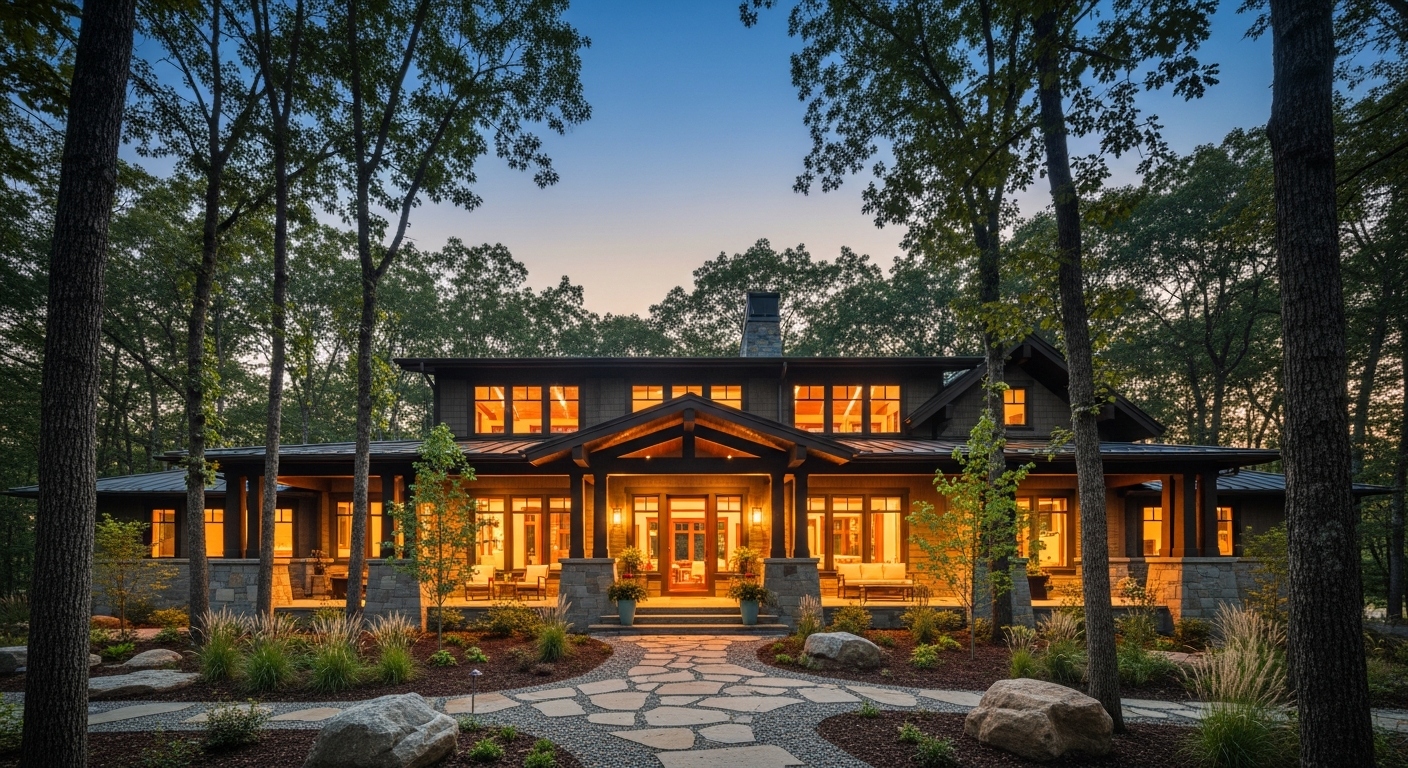
One of the most iconic elements is the low-pitched roof, often accented with wide overhanging eaves. Exposed rafters and decorative brackets add both structural honesty and visual depth. Rather than hiding how a home is built, Craftsman architecture celebrates construction itself.
The front porch is another defining feature. These porches are not decorative afterthoughts. They are true living spaces designed for conversation, relaxation, and connection with the surrounding neighborhood. Thick tapered columns, often resting on stone or brick bases, create a grounded and welcoming appearance.
Windows are usually grouped in sets, allowing natural light to flood the interior while creating balanced exterior symmetry. Multi-pane upper sashes paired with larger lower panes create the signature window style often associated with Craftsman homes.
Natural materials are everywhere. Wood, stone, brick, and handcrafted metal details dominate both the exterior and interior. Rather than relying on flashy ornamentation, Craftsman homes create beauty through texture, proportion, and material authenticity.
The Warmth of Natural Materials
One of the greatest reasons homeowners continue to fall in love with Craftsman architecture is its commitment to natural materials.
Step inside a true Craftsman home, and you are likely to encounter rich oak trim, exposed wood beams, built-in cabinetry, and handcrafted millwork. Floors often feature hardwood with warm tones that create immediate comfort. Fireplaces are frequently constructed from stone, brick, or handcrafted tile, becoming natural gathering places within the home. This emphasis on real materials creates something increasingly rare in modern construction—authenticity.
Wood ages beautifully. Stone gains character over time. Handcrafted hardware develops patina. Instead of deteriorating aesthetically, Craftsman homes often become more beautiful as the years pass. That sense of permanence is a major part of their enduring appeal.
Practical Beauty in Every Detail
Craftsman homes are beautiful, but their beauty is never separated from function. Every design decision serves a purpose.
Built-in bookshelves eliminate wasted wall space while adding storage. Window seats transform ordinary corners into reading retreats. Dining room buffets provide elegant functionality for entertaining. Hallways are often minimized, allowing more square footage to be devoted to actual living spaces.
This practical mindset reflects the core values of the Arts and Crafts movement. Design was never about excess. It was about creating environments that made everyday life better.
Even today, homeowners are rediscovering the brilliance of these thoughtful layouts. In a world where open-concept living sometimes sacrifices intimacy, Craftsman homes offer spaces that feel both connected and distinct. Rooms flow naturally into one another while still maintaining individual identity.
The Famous Front Porch
Few architectural features create emotional appeal like a Craftsman porch.
Wide, covered, and intentionally inviting, these porches embody a lifestyle that many people long for today. They encourage slow mornings with coffee, quiet evenings with family, and spontaneous conversations with neighbors.
Architecturally, the porch serves as a transition between public and private space. It softens the move from street to home, creating an experience rather than simply an entrance.
The structural elements are equally memorable. Tapered columns, stone piers, exposed beams, and handcrafted railings create a sense of permanence and character.
Even in newly built homes, homeowners often request Craftsman-inspired porches because they instantly make a house feel established, welcoming, and lived in.
Interiors Designed for Real Living
The interior of a Craftsman home feels intentional from the moment you walk through the front door.
Unlike some architectural styles that prioritize grand entrances or formal rooms, Craftsman interiors focus on livability. Spaces feel human-scaled, comfortable, and deeply connected.
Living rooms often center around fireplaces, creating natural gathering points. Dining rooms frequently feature coffered ceilings, built-in cabinetry, and warm wood finishes. Kitchens are designed for functionality while still maintaining visual harmony with the rest of the home.
Bedrooms tend to feel private and restful, often with generous windows that invite natural light throughout the day.
One of the most beloved features is the abundance of built-ins. From bookcases to benches to storage cabinets, these details add charm while maximizing usability.
In many ways, Craftsman homes anticipated today’s interest in efficient, purposeful living.
Why Craftsman Homes Still Matter Today
Modern homeowners have more choices than ever before. Contemporary homes offer sleek minimalism. Farmhouse styles bring rustic charm. Mid-century designs offer bold geometry.
Yet Craftsman homes continue to attract buyers, renovators, and custom builders across the country. Why? Because they offer something deeper than aesthetics.
They offer emotional connection. Craftsman homes feel personal. They feel rooted. They feel as though someone cared deeply about every joint, every beam, every window, and every inch of trim.
In a world increasingly filled with disposable products and fast construction, that sense of permanence carries enormous value. Buyers often describe Craftsman homes as “homes with soul.” That phrase captures something difficult to quantify but impossible to ignore.
Modern Craftsman Homes
While historic Craftsman homes remain highly desirable, modern interpretations are thriving as well.
Today’s architects and builders often blend classic Craftsman elements with contemporary functionality. Open kitchens connect more seamlessly to living spaces. Energy-efficient windows improve insulation. Smart-home technology integrates discreetly into traditional interiors.
Exterior designs still feature broad porches, natural materials, and signature rooflines, but floor plans may include home offices, larger primary suites, and flexible family spaces.
This evolution proves that Craftsman architecture is not trapped in the past. Instead, it continues to adapt while staying true to its core values. That balance between tradition and innovation is one of its greatest strengths.
Renovating a Historic Craftsman
Owning a historic Craftsman home can be incredibly rewarding, but restoration requires respect for the original design.
Many homeowners choose to preserve original woodwork, restore vintage windows, refinish hardwood floors, and repair handcrafted tile fireplaces rather than replace them.
The goal is not simply modernization. The goal is stewardship.
When restored thoughtfully, these homes become living pieces of architectural history while still meeting modern expectations for comfort and efficiency.
Updated plumbing, electrical systems, insulation, and climate control can coexist beautifully with century-old craftsmanship. The result is often the best of both worlds.
Landscaping That Complements the Architecture
A Craftsman home does not end at the front door. Its relationship with the landscape is an essential part of the overall design.
Native plants, stone walkways, mature trees, low garden walls, and thoughtfully layered greenery complement the home’s natural materials. Gardens often feel organic rather than overly manicured. Outdoor spaces become extensions of the architecture itself.
Whether it’s a brick path leading to the porch, a wooden pergola in the backyard, or carefully placed landscape lighting, every detail contributes to a sense of harmony.
The Investment Value of Craftsman Homes
Beyond aesthetics, Craftsman homes often hold strong market appeal. Their architectural character, durable materials, and emotional connection make them highly desirable in many real estate markets.
Buyers are often willing to pay premium prices for homes that feel unique and authentic, especially in neighborhoods where historic architecture is protected or celebrated.
Even newly built Craftsman-inspired homes tend to attract strong interest because they offer timeless curb appeal. While no investment is guaranteed, homes with enduring architectural value often weather market shifts better than trend-driven designs.
A Style That Feels Like Home
Perhaps the greatest strength of Craftsman architecture is that it never feels cold, intimidating, or temporary. It feels like home. It feels like stories shared by the fireplace. Like children running across hardwood floors. Like summer evenings on the porch. Like holiday gatherings, handwritten recipes, and books passed down through generations. Craftsman style homes remind us that architecture is not simply about building structures. It is about creating places where life unfolds beautifully. That is why, after more than a century, Craftsman homes continue to inspire. And that is why they likely always will.